
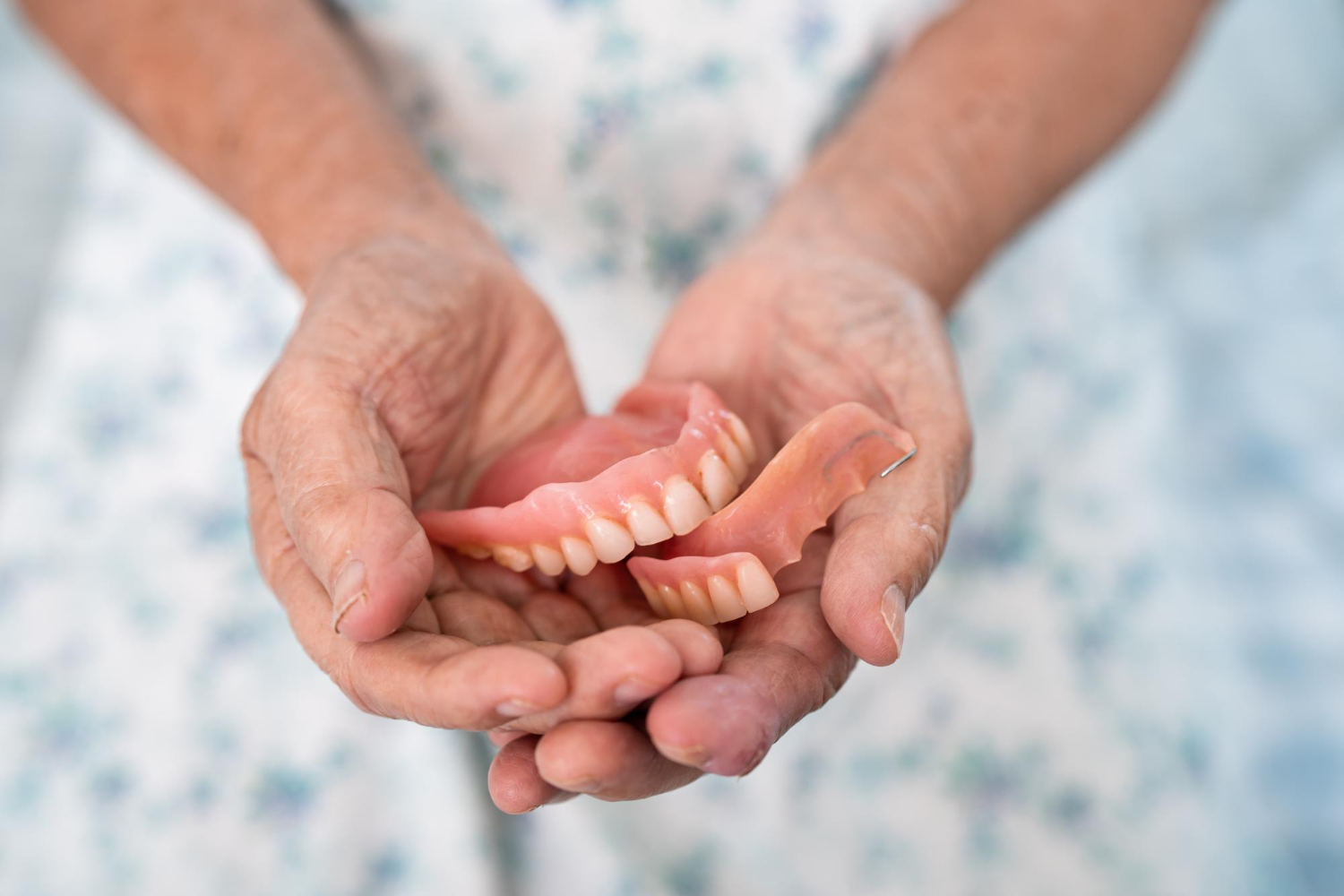
A denture that fits perfectly on day one doesn’t always fit the same way a few years later, and most patients don’t realize why until we explain it during a checkup.
It’s not that the denture wore out. It’s that the mouth underneath it kept changing shape the entire time. That mismatch is the real reason relining and replacement come up so often when we talk about dentures in Riverpark, and it surprises people every single time.
Your Jawbone Keeps Changing, Even Without Teeth
Bone needs stimulation to maintain its shape, and natural teeth provide that stimulation every time you chew. Once teeth are gone, the jawbone slowly reshapes itself, shrinking gradually over months and years.
A denture that sat snugly against the gums initially will eventually sit against a slightly different foundation. This isn’t a flaw in the denture. It’s simply how bone behaves once it’s no longer supporting natural teeth, and it happens whether someone notices it or not.
It’s the biggest reason dentures in Riverpark need attention that has nothing to do with how well they were made in the first place.
Relining: The Fix Most People Don’t Know Exists
A reline adjusts the inner surface of a denture to match your current gum shape, without replacing the entire piece. Think of it as recalibrating the fit rather than starting over.
Most patients with dentures in Riverpark need their first reline within one to two years, then roughly every couple of years after that, though this varies based on how quickly bone changes for each individual.
It’s a quicker, less expensive step than a full replacement, and it often solves fit problems people assume mean something more serious is wrong.
Signs a Reline Might Be Overdue
- Your denture feels loose by midday, even though it fit fine that morning.
- You’ve noticed more slipping while eating or talking than you used to.
- Sore spots keep showing up in the same places.
- You’ve caught yourself using more adhesive than you used to need.
None of these signs mean anything is broken. They usually just mean your gums have shifted enough that the fit needs a small correction.
When a Reline Isn’t Enough Anymore
Relining works well when the denture itself is still in good shape and only the fit has changed. But dentures don’t last forever regardless of adjustments. The material itself wears down over time, teeth on the denture can flatten from years of chewing, and the overall structure eventually reaches a point where a reline just patches over a bigger issue.
Most dentures in Riverpark reach this stage somewhere between five and seven years, though some last longer with excellent care and some need attention sooner.
What Actually Wears Out Inside a Denture
This part rarely gets mentioned, but the chewing surface of a denture flattens gradually with everyday use, the same way shoe soles wear thin over years of walking.
Flattened chewing surfaces make eating less efficient, even if the fit still feels reasonably comfortable. Patients sometimes assume a loose feeling is the only sign something needs attention, when a worn chewing surface can be just as important a reason to consider dentures in Riverpark for a replacement.
How We Evaluate Whether to Reline or Replace
During a checkup, we look at three things together: how the denture currently fits against your gums, how much wear shows on the chewing surface, and how long it’s actually been since the last adjustment.
If the base material is solid and only the fit has drifted, a reline usually solves it. If wear has caught up with the material itself, replacement becomes the more reliable long-term choice. Every recommendation for dentures in Riverpark starts with this comparison rather than a default timeline applied to everyone equally.
A Simple Way to Think About Timing
Relining is closer to routine maintenance, something expected every couple of years as your mouth naturally changes shape.
Replacement is closer to retiring something that’s simply reached the end of its useful life, usually after five to seven years of daily wear. Neither one means something went wrong. Both are just part of owning dentures long-term.
Why We Keep Checking, Even When Nothing Feels Wrong
At Clove Dental Riverpark, we bring this up at routine visits even when patients haven’t mentioned any discomfort, since bone changes gradually enough that people often adjust without noticing.
Staying ahead of that shift with a reline is far easier than waiting until eating becomes genuinely difficult. If you’ve been wearing the same dentures for a few years without a checkup, it’s worth having someone take a look, even if everything currently feels fine.