
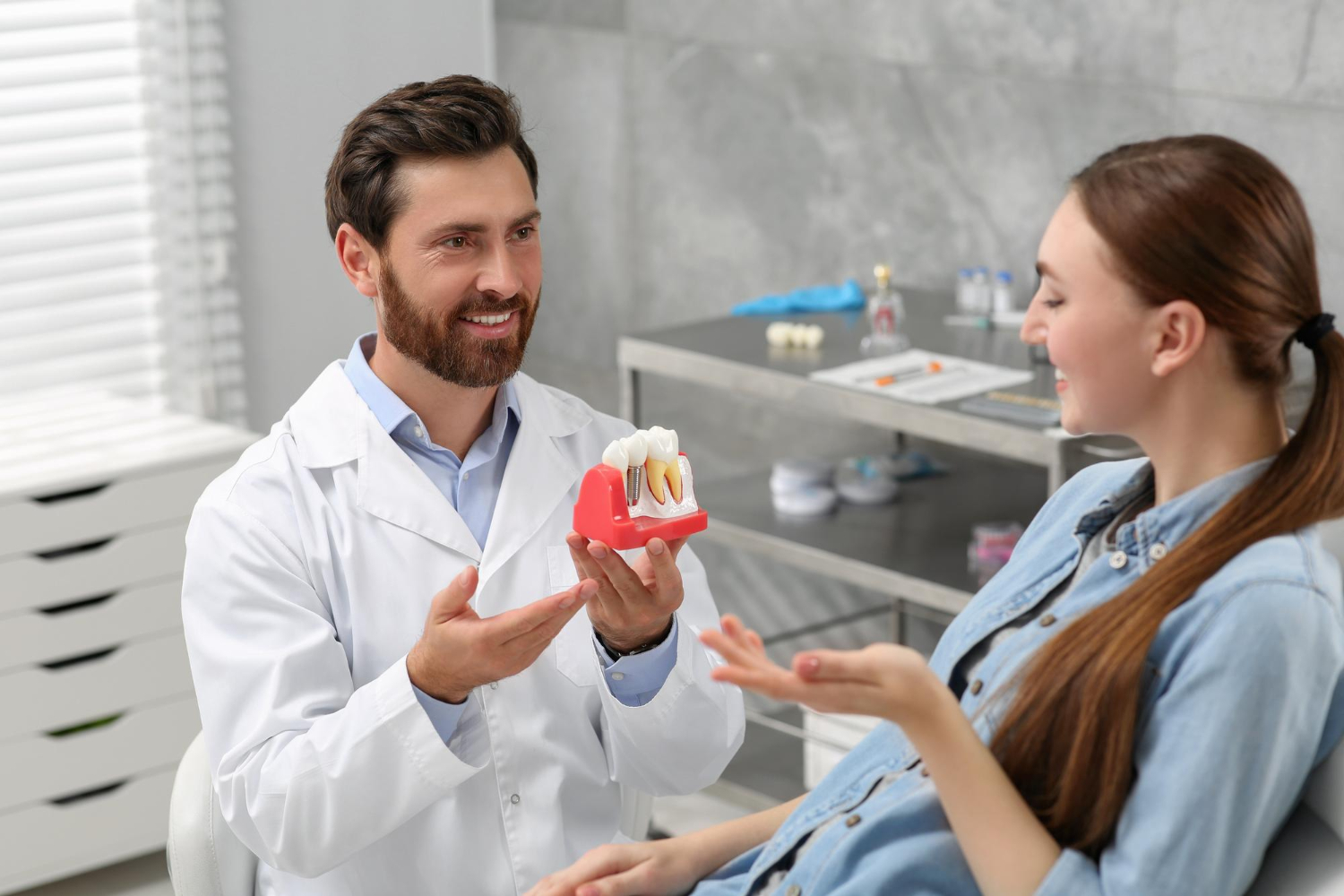
Most people picture the surgery when they think about implants, but almost nobody pictures the Tuesday morning three months later when brushing your teeth feels completely normal again. That gap between “big procedure” and “regular Tuesday” is where most of the real questions live.
We get asked about daily life more than almost anything else when patients are considering dental implants in Riverpark, so we thought it was worth breaking down honestly, without overselling how simple or how difficult it actually is.
The First Few Days: Slower, Not Stopped
Right after placement, your routine doesn’t pause completely, but it does slow down. Soft foods take over for a while, chewing on the other side becomes second nature almost immediately, and brushing near the surgical site gets gentler without anyone needing to remind you twice.
Most patients are surprised by how quickly their body adjusts on its own. This early stretch is short, and it’s the part of dental implants in Riverpark that people worry about most beforehand, even though it tends to be far more manageable than expected.
Brushing Around an Implant: The Adjustment Nobody Explains Well
An implant doesn’t get cavities the way a natural tooth does, but the gum tissue around it still needs real attention. Plaque builds up around an implant just as easily as around a natural tooth, and skipping that area because “it’s not real” is one of the more common mistakes we see.
A soft brush, gentle pressure, and consistent flossing around the implant keep the surrounding gum tissue healthy for years. This part of the routine becomes automatic fast, usually within a couple of weeks.
What Chewing Feels Like Once Healing Finishes
This is the part people ask about the most. Once healing is complete, chewing feels remarkably close to a natural tooth, sometimes indistinguishable in daily use. Steak, apples, nuts, whatever you’d normally eat without thinking twice, all come back onto the table.
The difference between a healed implant and a natural tooth in daily function is smaller than most patients expect walking into their consultation.
The Habit That Needs to Change
Here’s something rarely mentioned: grinding habits matter more with an implant than people assume. A natural tooth has a small amount of natural give built into its root structure.
An implant is fused directly to bone, so it doesn’t have that same flexibility. If nighttime grinding or daytime clenching is part of your routine, it’s worth mentioning to your dentist, since a nightguard protects an implant differently than it protects natural teeth.
Traveling and Everyday Activities
Flying, exercising, swimming, none of it changes once healing wraps up. Airport security won’t flag it, and normal physical activity puts no unusual strain on it.
The only real adjustment tends to happen in the first couple of weeks post-surgery, when your dentist may ask you to hold off on strenuous activity temporarily. After that window closes, life goes back to whatever it looked like before.
Checkups Look a Little Different, Not More Frequent
Routine visits after getting dental implants in Riverpark don’t happen more often than regular checkups, but what your dentist checks does shift slightly.
Instead of just watching for decay, we’re looking at the surrounding gum tissue, bone stability, and how the implant is functioning under everyday pressure. Patients with dental implants in Riverpark sometimes expect these visits to feel more clinical, but it’s a different kind of attention, not an additional burden on your schedule.
Small Signs Worth Mentioning at Your Next Visit
- Gum tissue around the implant looks puffier than the rest of your mouth.
- You notice a new sensitivity to pressure while chewing.
- The implant feels slightly different when you bite down compared to a few months ago.
- You’ve started clenching your jaw more since getting busier or more stressed.
None of these automatically mean something’s wrong, but they’re worth a quick mention rather than waiting for your next scheduled visit.
Why This Adjustment Period Matters More Than People Think
At Clove Dental Riverpark, we spend real time walking patients through this stretch because the adjustment period shapes how comfortable someone feels with their new implant long after healing finishes.
Dental implants in Riverpark aren’t just a one-time procedure that ends at the follow-up appointment. They become part of daily life, and understanding what changes, even briefly, makes that transition feel a lot less uncertain.
Conclusion
Give it a few months, and most patients stop thinking about their implant as anything separate from the rest of their smile.
Brushing becomes routine, chewing becomes automatic, and the only real difference tends to be a little extra attention during checkups. That’s really the goal behind dental implants in Riverpark: something that fits into daily life so well, you eventually forget it was ever a big decision in the first place.