
Are you assuming you would notice oral cancer yourself?
Many patients believe they would feel pain or see something obvious if oral cancer were developing. You may be asking yourself, is oral cancer screening in Riverpark really necessary if I don’t have symptoms?
This assumption is exactly why screenings matter. At Clove Dental Riverpark, dentists routinely identify early changes patients were completely unaware of, because early oral cancer rarely announces itself clearly.
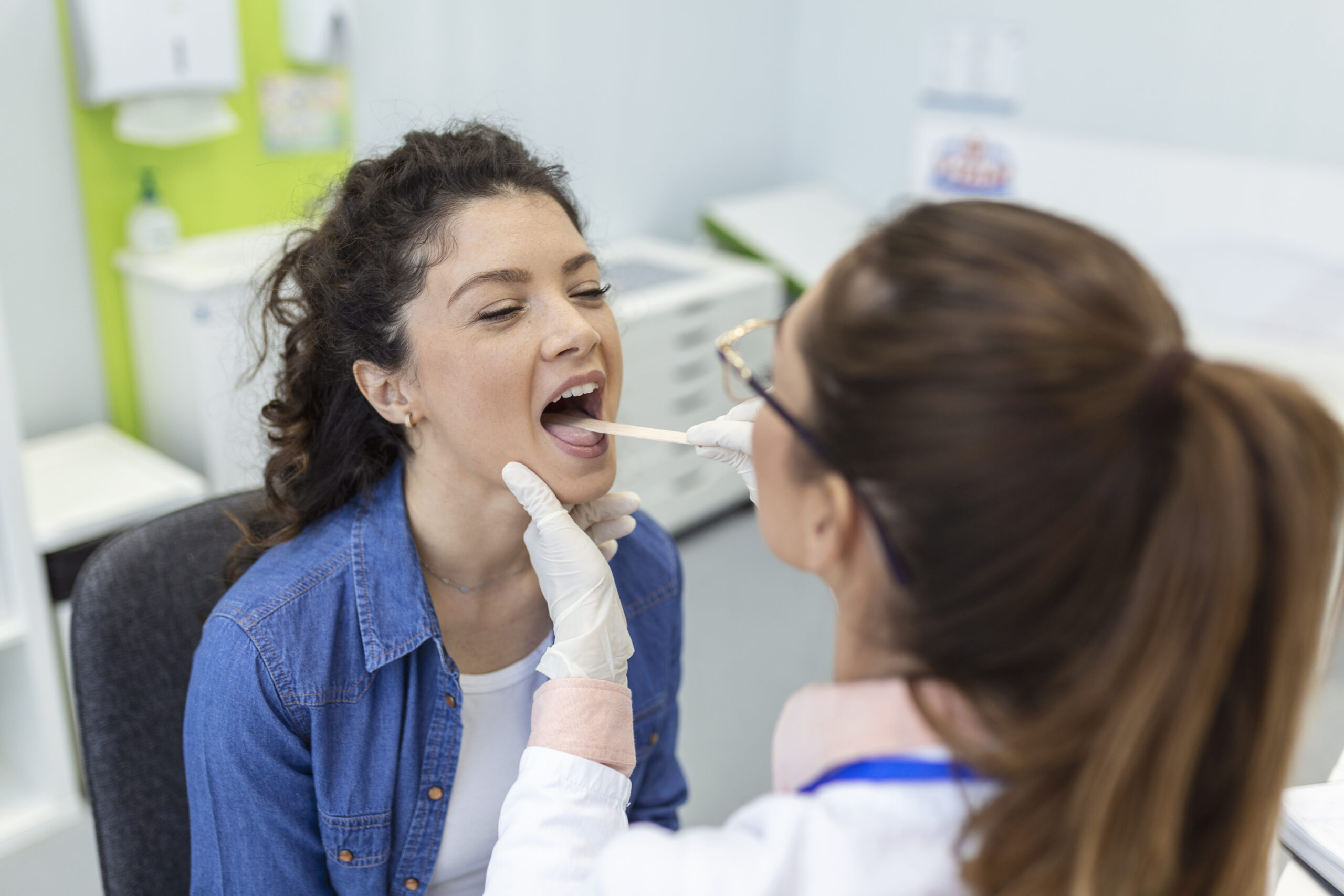
What Oral Cancer Screening In Riverpark Actually Involves
Oral cancer screening is not a single test or device. It’s a structured clinical evaluation performed during a dental exam.
Dentists assess:
- Soft tissues of the cheeks, lips, and gums
- The tongue (top, sides, and underside)
- The floor and roof of the mouth
- How tissues move, heal, and respond
The goal is not to find advanced disease, but to detect abnormal patterns early, when intervention is most effective.
Why Dentists Catch Signs Patients Miss
Patients usually notice pain, swelling, or visible sores. Dentists are trained to notice change.
Dentists look for:
- Areas that don’t heal normally
- Subtle color variations
- Texture differences between tissues
- Asymmetry that wasn’t present before
These early indicators are often painless and easy to overlook without professional evaluation.
The Difference Between Symptoms And Clinical Warning Signs
Symptoms are what patients feel. Warning signs are what dentists observe.
In early oral cancer:
- Pain is often absent
- Lumps may be soft or flat
- Lesions may not bleed
- Discomfort may come and go
This gap explains why oral cancer screening in Riverpark focuses on observation, not symptom reporting.
How Healing Patterns Raise Red Flags
One of the most important things dentists evaluate is how tissue heals. Normal tissue recovers within a predictable timeframe.
Dentists become concerned when
- A spot does not improve over time.
- Tissue looks irritated without a clear cause.
- Changes persist despite good oral hygiene.
- These patterns often prompt closer monitoring or referral.
Why Routine Dental Visits Matter For Screening?
Screening effectiveness depends on comparison over time. Dentists track how tissues looked at previous visits.
This allows them to
- Identify gradual changes.
- Spot new abnormalities early.
- Distinguish harmless variations from concerning trends.
- Skipping regular visits removes this important baseline.
Who Benefits Most From Oral Cancer Screening?
While anyone can develop oral cancer, certain factors increase risk. Dentists pay closer attention when patients have-
- Tobacco or alcohol use history
- Prolonged sun exposure affecting lips
- Chronic irritation in the mouth
- Certain medical conditions or medications
However, dentists also screen patients without obvious risk factors, because early disease doesn’t always follow predictable patterns.
Why Oral Cancer Screening Is Not Just For Older Adults?
A common misconception is that oral cancer only affects older individuals. Dentists are seeing cases across a wider age range.
This makes routine oral cancer screening in Riverpark important regardless of age, especially when changes are subtle and silent.
What Happens If A Dentist Notices Something Unusual
Finding an abnormal area does not mean cancer. Most findings are benign.
Dentists may
- Monitor the area over time.
- Recommend changes to reduce irritation.
- Refer for further evaluation if needed.
- The goal is careful assessment, not alarm.
Why Early Detection Changes Outcomes?
When oral cancer is caught early:
- Treatment is often less invasive.
- Recovery is easier.
- Long-term outcomes improve significantly.
This is why dentists emphasize screening even when patients feel fine.
Why Riverpark Patients Benefit From Dentist-Led Screening?
Dentist-led screening integrates oral cancer detection into routine care. Patients do not need special appointments or symptoms to benefit.
Knowing the value of oral cancer screening in Riverpark helps patients see it as preventive care, not something to wait on.