
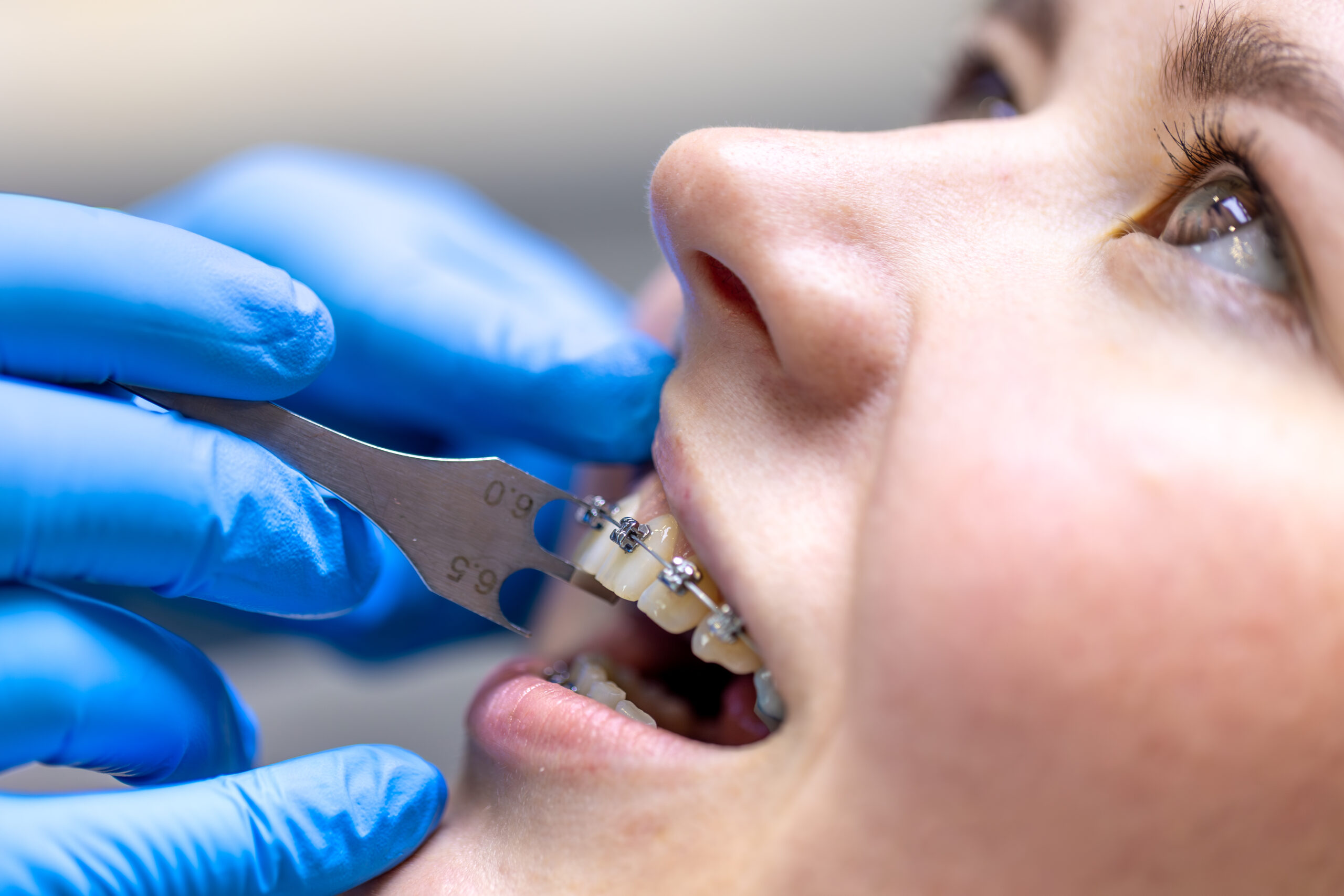
Are you confused about whether braces are cosmetic or medical?
You may be asking, are braces considered cosmetic, or are they truly orthodontic treatment? The confusion usually starts when people hear phrases like “cosmetic braces” online or on social media. It sounds appealing, but it doesn’t reflect how braces are actually used in real dental cases.
At Clove Dental Riverpark, we often see patients who delayed treatment because they thought braces were optional or purely aesthetic. Once we look at their bite, the story changes.
Are Braces Considered Cosmetic Or Orthodontic?
Braces are orthodontics. They are meant to correct the alignment and not merely the appearance of teeth and jaws. Though the straitening of teeth enhances the beauty, braces are aimed at correcting functional problems.
So when patients ask are braces orthodontics, the answer is yes, always. Braces are categorized under the treatment of orthodontics since they deal with the alignment of the bite, the spacing system, jaw symmetry and the efficiency of chewing.
Why The Term “Cosmetic Braces” Is Misleading
Cosmetic braces is what they call them which implies that braces are not really fixing anything except looks. As a matter of fact, majority of the orthodontic cases are functional which are difficult to detect in the mirror.
This is a misleading term to dentists because:
- Problems with bites may appear simple, however, wear very considerable.
- The imbalance in the jaw may cause headache or pain in the jaw.
- There is a possibility of decay and gum disease which increases with crowding.
When it is referred to as cosmetic braces, the actual purpose of using braces is concealed.
Real Bite Correction Scenarios Dentists See
Many Riverpark patients are surprised to learn they need braces even though their teeth look “mostly straight.”
Common orthodontic issues include:
- Deep bite: Upper teeth cover too much of the lower teeth
- Crossbite: Upper and lower teeth don’t line up correctly
- Open bite: Teeth don’t touch when the mouth is closed
- Crowding: Teeth overlap, making cleaning difficult
In these cases, braces are orthodontic tools used to prevent damage, not cosmetic add-ons.
Why Braces Are Prescribed Even When Teeth Look Straight
Appearance doesn’t tell the full story. Dentists evaluate:
- How teeth meet during chewing
- Pressure distribution across the bite
- Jaw alignment during movement
- Signs of early enamel wear
This is why asking are braces considered cosmetic often leads to confusion. Braces may change how teeth look, but dentists prescribe them to fix how teeth function.
Braces Vs Cosmetic Dental Treatments
Cosmetic dentistry is concerned with surface looks. Orthodontics lays emphasis on form and functionality.
Here’s the difference:
- Plastic surgery: veneers, bonding, whitener.
- Dental therapy: Braces and orthodontic aligners.
Bite mechanics are not fixed using cosmetic treatments. Braces do.
How Insurance Views Braces
Insurance companies typically classify braces as orthodontic treatment, not cosmetic care. Coverage decisions are based on:
- Bite severity
- Functional limitations
- Risk of future damage
This is another reason why the idea that braces are cosmetic doesn’t hold up in real clinical or insurance settings.
Why Adults Often Misunderstand Orthodontic Needs
Adults are more likely to assume braces are cosmetic because:
- Pain may develop slowly
- Bite problems worsen over time
- Symptoms feel unrelated to teeth at first
By the time jaw pain, headaches, or tooth damage appear, orthodontic correction becomes necessary, not optional.
Why Modern Braces Still Matter
Even with clear aligners available, braces remain essential for many bite corrections. Some movements require fixed appliances to achieve stable results.
This reinforces the point that are braces orthodontics is not a debate, it’s a definition based on how treatment works.
Why Riverpark Patients Benefit From Proper Classification
When the patients know that braces are a form of orthodontic treatment, they:
- Make quality decisions about treatment.
- Do not defer requisite correction.
- Know long-term returns other than looks.
Good classification entails the establishment of good trust and results.